
Role of Silica Gel in Phytochemical Extraction and Purification

Introduction
Phytochemical extraction and purification represent critical steps in natural product research, pharmaceutical development, and herbal medicine standardization. Among the various adsorbents employed in these processes, silica gel stands out as the most versatile and widely utilized stationary phase. Its exceptional adsorption capacity, chemical stability, and cost-effectiveness have made it indispensable in isolating bioactive compounds from plant matrices. Understanding the role of silica gel in phytoconstituents extraction enables researchers to optimize separation protocols and achieve high-purity natural products.
Understanding Silica Gel Properties
Silica gel is a porous, amorphous form of silicon dioxide characterized by a high surface area and hydroxyl group-rich surface. These silanol groups create polar interaction sites that facilitate selective retention of phytochemicals based on their polarity. The material exists in various grades and particle sizes, each suited for specific applications in phytochemical extraction.
The particle size distribution significantly influences separation efficiency. Silica gel 230-400 mesh, with particle diameters ranging from 37 to 63 micrometers, represents the standard grade for conventional column chromatography. This mesh size offers an optimal balance between resolution and flow rate, making it ideal for preparative-scale phytochemical purification. The smaller particles provide increased surface area and improved mass transfer, resulting in sharper separation bands and better compound resolution.
Silica gel H designation indicates a material with enhanced purity and consistent activity. The "H" denotes high purity with minimal metallic impurities, making it particularly suitable for separating acid-sensitive or reactive phytochemicals. This grade exhibits uniform adsorption characteristics and minimal catalytic activity, preventing degradation of labile natural products during the purification process.
Column Chromatography Applications
Column chromatography utilizing silica gel remains the cornerstone technique for phytochemical purification. The method exploits differential migration rates of compounds through a packed silica bed, achieving separation based on polarity differences.
Conventional Column Chromatography
In standard silica gel chromatography, crude plant extracts obtained through solvent extraction are loaded onto a silica column and eluted with solvents of increasing polarity. This gradient elution systematically separates phytoconstituents, with non-polar compounds eluting first, followed by progressively more polar metabolites. The technique excels in processing large sample quantities, making it invaluable for isolating sufficient material for structural characterization and biological testing.
Flash Chromatography
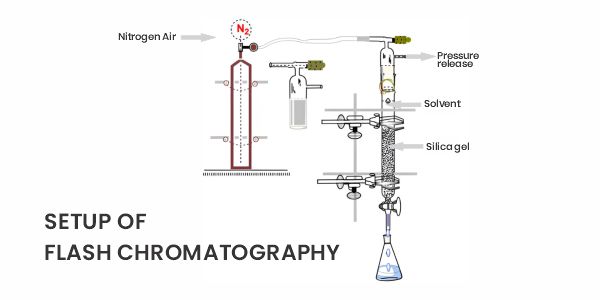
Flash chromatography represents a rapid purification technique that employs positive pressure to accelerate solvent flow through silica gel columns. This method significantly reduces separation time compared to gravity-fed systems while maintaining excellent resolution. Flash chromatography has become the preferred choice for routine phytochemical purification, particularly when processing multiple samples or time-sensitive compounds. The technique typically uses silica gel 230-400 mesh or finer particles to achieve optimal performance.
Vacuum Liquid Chromatography (VLC)
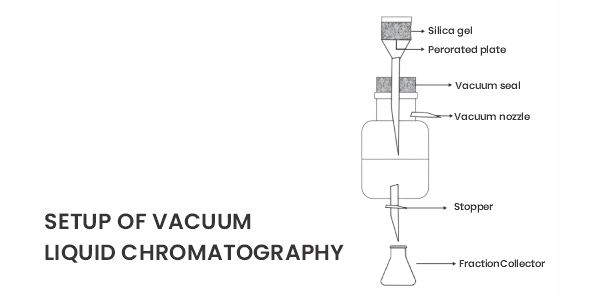
Vacuum liquid chromatography offers an efficient alternative for initial fractionation of complex plant extracts. VLC employs a sintered glass funnel packed with silica gel and operates under reduced pressure, enabling rapid separation with minimal solvent consumption. This technique proves particularly valuable for preliminary purification, removing bulk impurities and generating enriched fractions for subsequent refinement through other chromatographic methods.
Complementary Chromatographic Techniques
Thin-Layer Chromatography (TLC)
Thin-layer chromatography serves as an essential analytical tool throughout the phytochemical extraction process. Silica gel-coated TLC plates enable rapid monitoring of extraction efficiency, optimization of mobile phase compositions, and tracking of compound purification. TLC provides qualitative fingerprinting of plant extracts and guides method development for preparative separations. The technique's simplicity, speed, and minimal sample requirements make it indispensable in natural product laboratories.
High-Performance Liquid Chromatography (HPLC)
High-performance liquid chromatography employs fine silica gel particles or chemically modified silica phases for high-resolution analytical and semi-preparative separations. HPLC complements preparative silica gel chromatography by providing quantitative analysis, purity assessment, and final polishing of isolated phytochemicals. The technique's precision and reproducibility make it the gold standard for quality control in phytochemical research.
Integration with Other Separation Methods
Liquid–Liquid Partitioning
Liquid–liquid partitioning frequently precedes silica gel chromatography in phytochemical workflows. This technique partitions crude extracts between immiscible solvents, achieving preliminary separation based on compound polarity. The resulting fractions, enriched in specific phytochemical classes, undergo more efficient purification through subsequent silica gel chromatography, reducing solvent consumption and processing time.
Sephadex Chromatography
Sephadex chromatography, based on size-exclusion principles, complements silica gel methods by separating compounds according to molecular weight rather than polarity. This orthogonal selectivity proves valuable for removing high-molecular-weight contaminants like proteins and polysaccharides before silica gel purification, or for final polishing of isolated phytochemicals.
Optimization Strategies for Phytochemical Extraction
Solvent Selection
Solvent extraction efficiency directly impacts subsequent silica gel purification success. Initial extraction typically employs solvents matching the polarity of target phytoconstituents. Methanol, ethanol, and their aqueous mixtures extract polar metabolites like glycosides and phenolics, while dichloromethane and hexane target lipophilic compounds. The extract's composition determines optimal loading conditions and elution strategies for silica gel chromatography.
Method Development
Developing effective silica gel separation protocols requires systematic optimization of multiple parameters including column dimensions, silica quantity, sample loading, and elution gradients. Preliminary TLC experiments guide mobile phase selection, while small-scale column trials establish optimal conditions before scaling to preparative separations. Modern approaches often combine traditional silica gel chromatography with advanced techniques like flash chromatography to maximize efficiency.
Advantages in Phytochemical Applications
Silica gel offers numerous advantages for phytochemical extraction and purification. Its chemical inertness preserves compound integrity, while variable particle sizes accommodate different separation scales. The material's affordability enables processing large quantities of plant material, essential for isolating minor constituents. Furthermore, silica gel's compatibility with diverse solvent systems provides flexibility in method development for chemically varied phytoconstituents.
Conclusion
Silica gel remains the foundation of phytochemical extraction and purification strategies, enabling isolation of bioactive natural products from complex plant matrices. Whether employed in conventional column chromatography, flash chromatography, vacuum liquid chromatography, or thin-layer chromatography, silica gel's unique properties facilitate efficient separation of phytoconstituents. Integration with complementary techniques like liquid–liquid partitioning, solvent extraction, and Sephadex chromatography creates comprehensive workflows optimized for natural product discovery. As phytochemical research continues advancing pharmaceutical and nutraceutical development, silica gel chromatography will undoubtedly remain central to isolating and characterizing nature's chemical diversity.
For product buying purpose contact us now.

